Download (binaries and source)
Quick Manual
Tutorial (old version without editor)
Compiling
Still around? So either you're using Linux/MacOS, are a cheap sob or simply curious. Good news then, because RPGAmbient is:
What will it do?
It can read vaguely SMIL-like xml modules describing sound events grouped by scenes. These sound events can be anything from a single song to multiple sound effects. If you know SMIL, the concept of parallel and sequentiell playback isn't new to you. Add "alternative" playback (randomly picking from a selection of sound events) and you're set. Events are started and stopped by pressing the assigned key shortcut. Some possibilities for random timing are also included.
Filters and Effects
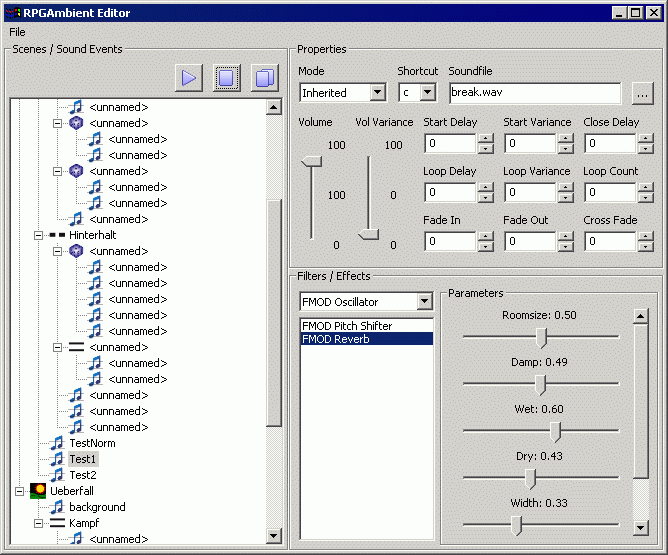
RPGAmbient is using what is best described as a DSP-network, which sounds rather fancy but simply means it's using FMODs channel groups to add any number of filters/effects anywhere you like. Basically this means that if you intend a scene to take place in some echo-y caves, you can add an echo-DSP to the scene rather than to every single sound event. Additionally you can add effects to single events, for example because you need a pitch shift on some annoyingly high whining or just want to change the volume on a particularly loud sound. Supported effects so far (and/or soon) are:
Save and comfortable import/export
As it doesn't take long before you realize how incredibly annoying it is, to transfer your creations on a different machine (most likely your notebook), there is a simple export tool. This does nothing but checking the module for all used sound files and copying them to an export directory (maintaining the original directories). In order to ensure your eternal bliss, there also is an import tool. Dump the exported folder in the import folder, run the tool and it will do this: only copy files that don't exist already. If a file with the same name, but different content exists, the new file will be renamed and the xml-module is updated. You should never have to manually fiddle with filenames or worry about breaking your old modules.
Available for everything, well, almost
Back to the all important platform question. Of course RPGA supports more than just Windows (else it would be a complete waste of time to reinvent this kind of wheel). While I can only offer binaries for Windows, anybody should be able to compile it for his own platform (especially since it seems that everything but Windows is shipped with a compiler and extensive tools and libraries). What you will need to download:
TinyXml is very harmless and entirely written in pure C/C++. No hassle and works wherever a C++ compiler is available. It's also one reason I started to use XML a lot more for my projects.
FMOD didn't give me any trouble compiling either and seeing how it's even supporting the Nintendo Wii, I don't think this one will become a limiting factor to platform support.
With boost, clunky comes to mind. Luckily we only need boost::filesystem, though if you feel like changing some of the code, you better be prepared for cursing whoever wrote it. Crashes galore if you don't disable name checking (or accidentally do it twice). However, it also supports lots of platforms and compilers (just make sure to exactly follow the documentation when compiling it). Will sooner or later be replaced when all tools use wxWidgets.
What's missing?
Many small things. A little more comfort for the editor as well as getting rid of a few kinks. Let me know if you find other things that are desperately needed.
Also, binaries are only available for Windows. This means you either compile it yourself or have to wait until somebody else is doing it. However, especially if you're using Linux you are probably quite used to that already. Of course, if somebody is compiling binaries for other systems and feels like sharing, just let me know and I will link to you or host them here.